
Title: Flame
Director: Ingrid Sinclair
Year of Release: 1996
Language: English
Run time: 85 minutes.
“There’s always a choice.”
From the middle of the 20th century, a wave of independence struggles swept across the continent which resulted in the liberation of most countries from the direct control of colonial powers. However, many countries with significant European inhabitants (due to their milder climates) found it more difficult to gain independence. In the case of Zimbabwe (then known as Rhodesia), when the British sought to grant independence, the white minority who were in power rejected the condition that the country had to be ruled by the black majority, and this led to the 15 year long Rhodesian Bush War. During this war, women joined and fought as part of various liberation groups engaging in guerrilla warfare, and Flame tells the story of two young girls who participate in the struggle.
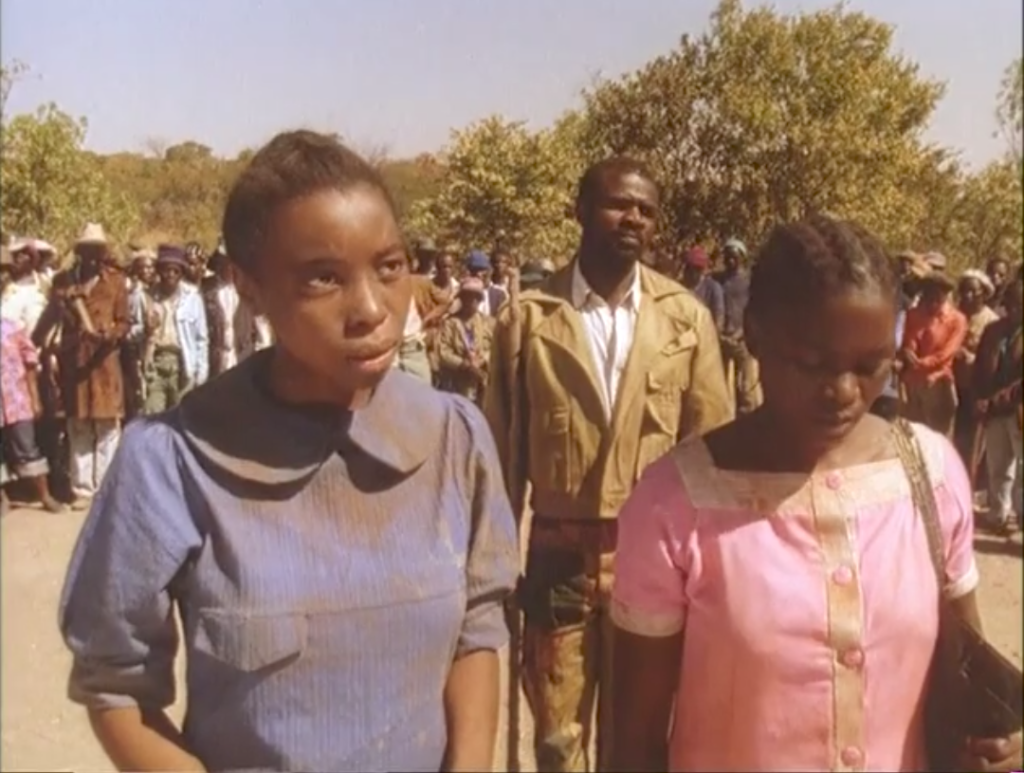
The film follows Florence and Nyasha, teenagers living in Mudzi, a district in Zimbabwe, during the heat of the Bush war. Many members of their community join the Zimbabwe African National Liberation Army (ZANLA), a liberation organisation, and while Florence is keen on joining the struggle, Nyasha is more academically oriented and less enthusiastic about armed freedom fighting. However, after Florence’s father is taken by the Rhodesian army, she decides to join ZANLA and convinces Nyasha to come along. When the girls make it to the camp, they quickly realize that the realities of freedom fighting are much different from the romanticised versions which they had been told. The training sessions are long and unforgiving, food is scarce, and basic supplies are severely rationed, making most of the women in camp vulnerable to sexual exploitation by the men in charge of these supplies. The girls are told to pick new names as part of their initiation, and while Nyasha picks the name Liberty, Florence goes with Flame.
Before they are sent into the battlefield, Flame is raped by a fellow soldier, and shortly after she finds out that her father has been killed. She focuses on fighting to drown out these events and she quickly distinguishes herself in the field, rapidly moving up the ranks. She becomes pregnant and gives birth in the heat of the war, but her baby and its father are killed during a raid on the camp. When the war finally comes to an end, Liberty and Flame take different paths in life, but they soon discover that their time as freedom fighters has bonded them, and many other women, forever.
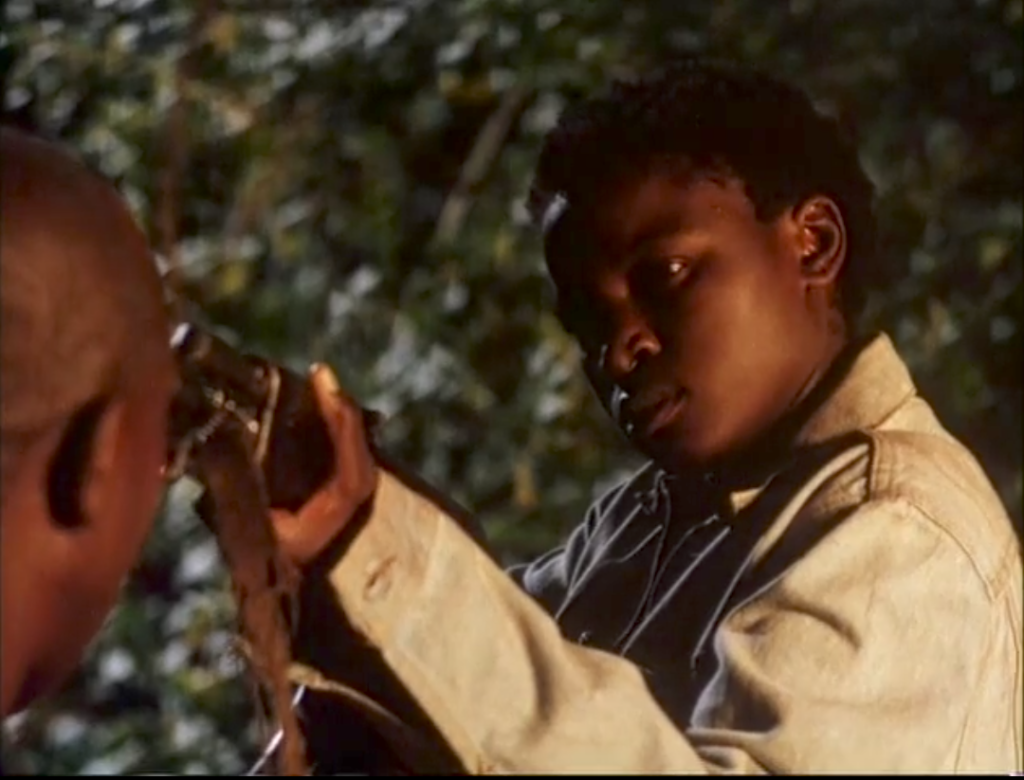
The film boasts a solid story and even more solid performances, with Marian Kunonga (Florence/Flame) and Ulla Mahaka (Nyasha/Liberty) complementing each other with a telepathic understanding akin to that of soldiers who had fought side-by-side for years. The various musical renditions of battle cries and songs of solidarity elevate the scenes in which they feature to an almost sacred status, and one cannot help but identify with the struggle even when one is aware of the atrocities being committed in the name of freedom. Flame was made during a period of African Cinema that has been described as the decade of the NGO film, during which foreign donors funded films with the purpose of spreading social messages, and while the creative qualities of many of these films may have been stifled by the quest of social sensitization, Flame (which was funded mostly by the European Union) manages to fulfil each mandate in style. The film was notably the first feature of Zimbabwean cinema about the second Chimurenga (liberation struggle), but it was controversial for two main reasons.
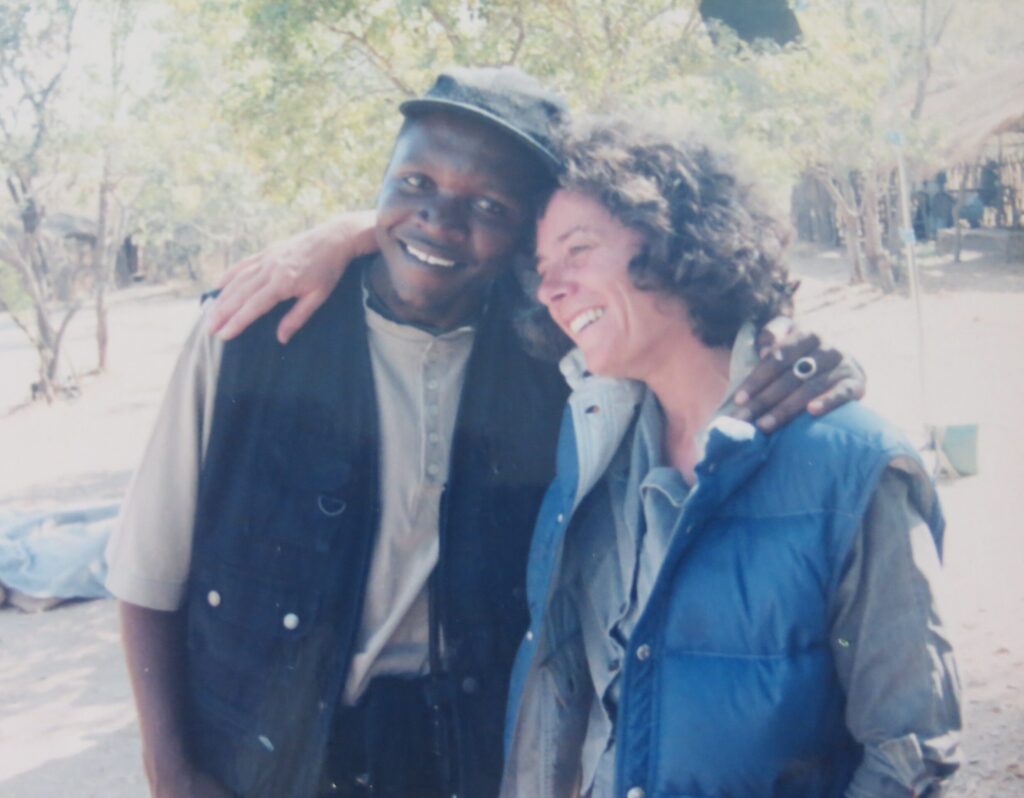
The first reason was that it was made by a white woman, Ingrid Sinclair, which, to some, was ironic since the Chimurenga entails struggles against white oppressors. The dynamics of African films being made by non-Africans has been explored in an earlier article, but in the case of Flame, Sinclair was well aware of these complexities. According to the director, “The first question I asked each of the women I interviewed was, ‘Do you think it’s legitimate that I, a white woman, should make this film?’” Sinclair was born and raised in England, only moving to Zimbabwe in the 1980s. However, her dedication to Africa and African Cinema is one that has endured for decades, and even after she was forced to flee Zimbabwe during the period that followed the fast track land reform programs which fanned the flames of racial tensions in Zimbabwe (a campaign which some have termed the “Third Chimurenga”) she continues to advocate for the continent’s films. On her return to her native England, she established the Afrika Eye Film Festival, an annual festival in Bristol which celebrates African cinema.
The second reason was its depiction of the negative experiences of women freedom fighters during the war. The film is unapologetically feminist, and the struggle of women forms the central theme. The scene where Flame is raped is meant to disturb the audience, and the attitude of most of the male soldiers towards the women in the film is condescending at best and predatory at worst. The War Veterans Association of Zimbabwe called for the film’s censorship, and the chairman of the association asked that the producers of the film be brought to justice. The Zimbabwean Police even seized the rough prints of the film during editing with the intent of charging the producers under obscenity laws, but these charges were never brought, and the prints were returned.
The celebrated stories of war usually focus on the exploits and struggles of men, ignoring those of women and relegating them to traumatic memories painfully held by individuals who would never be allowed to share their truths. Flame is a successful attempt to give a voice to these women, and it is no surprise that many of the men who were responsible for, or complicit in, these negative experiences were so keen on censoring the fictional account of Flame. The reason was simple; Flame’s account may have been fictional, but it was accurately representative of the true experience of hundreds, maybe even thousands, of women in the country.
While she has made a few other documentaries and short films, Sinclair has not made a feature length fictional narrative since Flame, most likely due to the fact that she was forced to leave Zimbabwe. She continues to be involved in the promotion of African Cinema, especially through the Afrika Eye Film Festival. Flame was screened at the Director’s Fortnight at the 1996 Cannes Film Festival, and the film is currently available for streaming on Kanopy. It may be difficult to legally access the film within Africa, however, but if you get the chance to see it, we urge you to!
Let us know what you think about the film in the comment section.

