
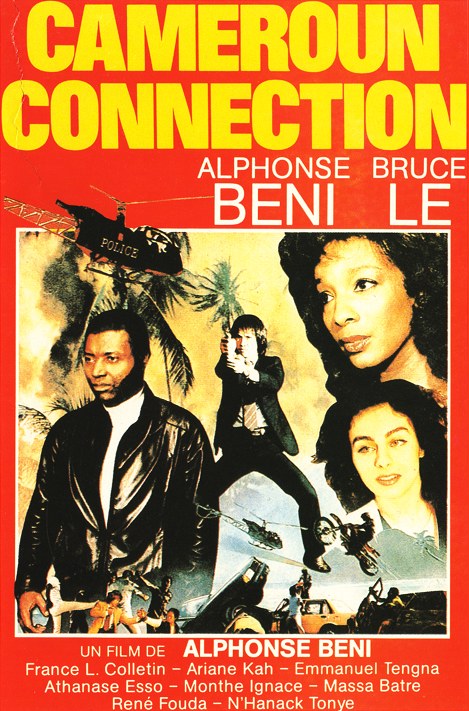
Title: Cameroon Connection
Director: Alphonse Beni
Year of Release: 1985
Language: French
Run time: 91 minutes.
“I only deal with the living!”
Cameroonian cinema may not enjoy the level of prestige or feature in as many discussions as those of countries like Senegal, Mali, or Nigeria, but its roster of visionary and resilient filmmakers would rival any on the continent. From the likes of Dikongué Pipa who was bold enough to explore anthology filmmaking with his 1983 film Funny Stories, Funny People, at a time when such films were unheard of on the continent, or Bekolo who took African experimental filmmaking to new heights, Cameroon’s contribution to the richness of African cinema will always be significant. However, one of the countries most prolific and daring filmmakers remains excluded from conversations about African cinema in general. Although he made numerous films spanning a period of over three decades, Alphonse Beni is a name that very few would recognise.
Born in Nkongsamba in 1946, Beni’s love for cinema led him to France where he hoped to pursue a career in film. Desperate to follow his passion, Beni ended up working as an actor in French erotic cinema before eventually getting the chance to direct a few softcore pornographic films. While it was an unusual and controversial starting point, Beni’s experience in these scenes would go on to provide him with the opportunity to make films in his native Cameroon.
He became friends with Roger Fellou, a cinematographer who had worked with many directors in the French New Wave but who was also involved in erotic cinema, and Fellou advised him to explore filmmaking back home. Heeding his friend’s advice, Beni returned to Cameroon to follow his passion, and after gradually finding success with his initial films, he made Cameroon Connection, the film that solidified his status as Cameroon’s most bankable box office name.
Cameroon Connection begins with a frightened young woman who turns up dead shortly after meeting up with a mysterious figure. Inspector Baïko is called in to investigate the case, and he quickly connects the murder to a series of missing/murder cases involving young women around Cameroon. Determined to solve the case, Inspector Baïko embarks on a mission that spans Yaonde, Douala, and Paris, making powerful friends and enemies along the way.
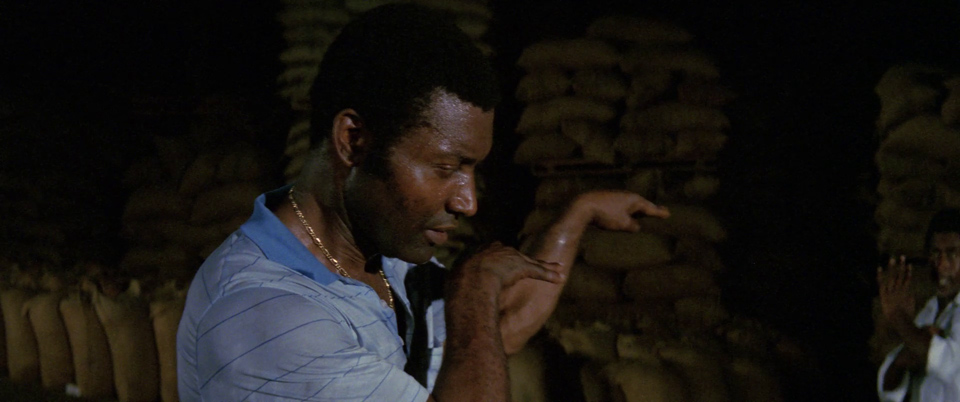
The film is an ambitious attempt to make an African action blockbuster, a concept that was so foreign to the continent’s film industry that Beni didn’t even bother to seek funding from the usual channels. African filmmakers at the time still heavily relied on government or foreign subsidies to make films, and Beni was certain that his idea of an action packed, semi-erotic murder-mystery would be dismissed as unserious. Thus, he funded his films through product placements and sponsorships, making him Cameroon’s first independent filmmaker.
Baiko’s distinctive yellow Toyota, his exclusive use of Cameroon Airlines on his trips, the numerous onscreen consumption of VAT 69 whiskey, and a seemingly irrelevant visit to a production plant for Alpha Beer were vital as these companies provided the funding for Beni to realize his dream of portraying a Cameroonian police inspector who fights martial arts, chases bad guys, and socializes with a string of beautiful women across continents.
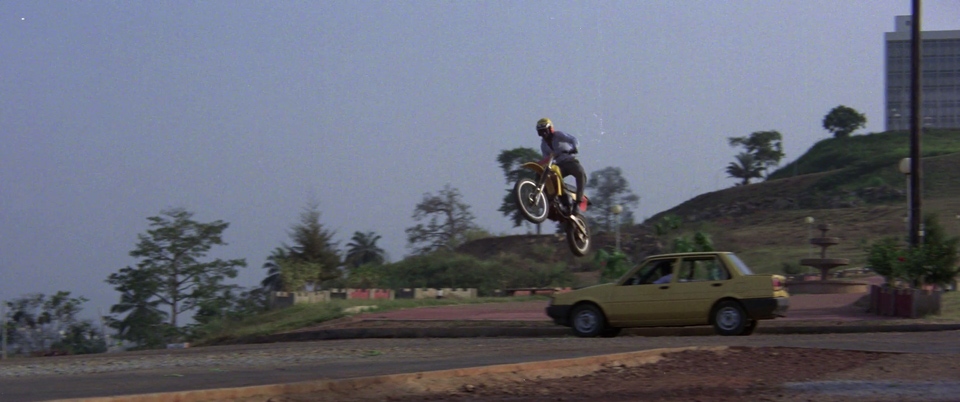
Understandably, the film is far from perfect. Some plot points are incoherent, a lot of the acting is underwhelming, and Beni’s background in erotic cinema inspires some scenes that feel unnecessary. However, the film has its many positives, and one that stands out immediately is the impeccable camerawork of Roger Fellou. Fellou, who was instrumental to Beni’s return to Cameroon, served as the cinematographer, and his talent behind the camera helps to nullify many of the film’s flaws. Some action sequences are also well done considering the lack of stuntmen in African cinema at the time. The highlight of the film is easily the five-minute car/bike chase scene through the streets of Yaoundé which occurs about halfway through its runtime. Even Beni’s harshest critics would have to commend him for pulling off such a brazenly dangerous feat with so little resources and experience.
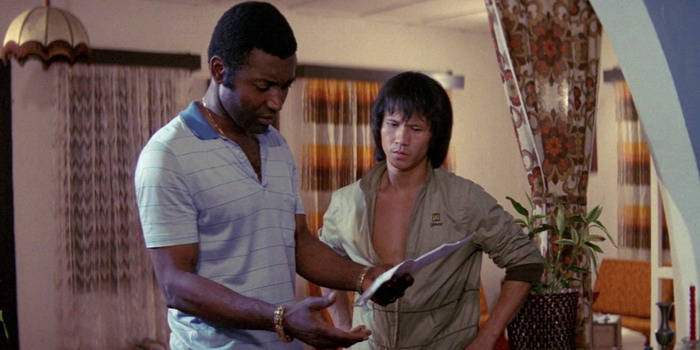
Beni’s charismatic commitment to his portrayal of Inspector Baïko makes up for the acting flaws, and it is easy to tell that he enjoyed every moment in character. He also managed to recruit some interesting talent to appear on screen, adding to the bizarre allure of the film. Bruce Le (one of the many Bruce Lee imitators that emerged after the death of the martial arts legend) plays a pivotal role, bringing a more refined and authentic spirit to the martial arts on screen and Paco Rabanne, the eccentric French Fashion designer, makes a cameo appearance.
Beni may not have had the talents or respect of his peers and he clearly wasn’t taken seriously by the industry, but he could boast of being a truly independent filmmaker, unlike most others who had to rely on government subsidies or foreign aid to make their films. Luckily for Beni, Cameroon Connection was a major commercial success in his home country, and he was able to make a few more films both at home and abroad. He was so successful that he even built a cinema in Cameroon to control the distribution of his films.
Eventually, the economic decline in Cameroon as well as the drastic changes in distribution practices around the world crippled Beni’s finances, and he lost most of his fortune. He still managed to make more films (although they were all low budget) before his death on the 12th of March 2023.
Cameroon Connection was widely seen in Cameroon on its release, and it has gained a cult following especially among B-movie and Bruceploitation enthusiasts thanks to the appearance of Bruce Le. While it hardly ever screens at any festivals, the film appears in a double feature with Black Ninja (1987), another film featuring Beni, which may be purchased from Pulse Store. If you ever get the chance to see it, we urge you to!
Let us know what you think about the film in the comment section.
Ps: A wonderful documentary on Beni’s life and his experience making Cameroon Connection titled Lights…Cameroon…Action!: The Life and Films of Alphonse Beni (2023) directed by Régis Autran may be found in a much more expensive set here.

