
Title: Den Muso (“The Young Girl”)
Director: Souleymane Cissé
Year of Release: 1975
Language: Bambara
Run time: 88 minutes.
“It’s too hard to be alive and see what one wouldn’t want to see even after death.”
While deciding on the first Souleymane Cissé film to feature on this platform, I was torn between Yeelen (1987), his most critically acclaimed effort, or Baara (1978), a personal favorite. Sometime during these deliberations, I was opportune to see his first feature length film, Den Muso, and I knew immediately that I had found my answer.
Cissé is often referred to as the greatest living African filmmaker, and his stature within the international film community has continued to grow since the 1970s. Retrospectives of his works have featured at various film festivals in recent times, and it is safe to say that he is one of the lucky members of the early cohort of African filmmakers to have received his flowers. However, praises are usually directed at Yeelen, Finye (1982), and Baara, with Den Muso being mentioned only in discussions about his general catalogue.
Regardless of its quality, a feature debut will always occupy a special place in a director’s canon. In Cissé’s case, Den Muso earns its place on merit, holding its own against any of the subsequent films he would go on to helm.
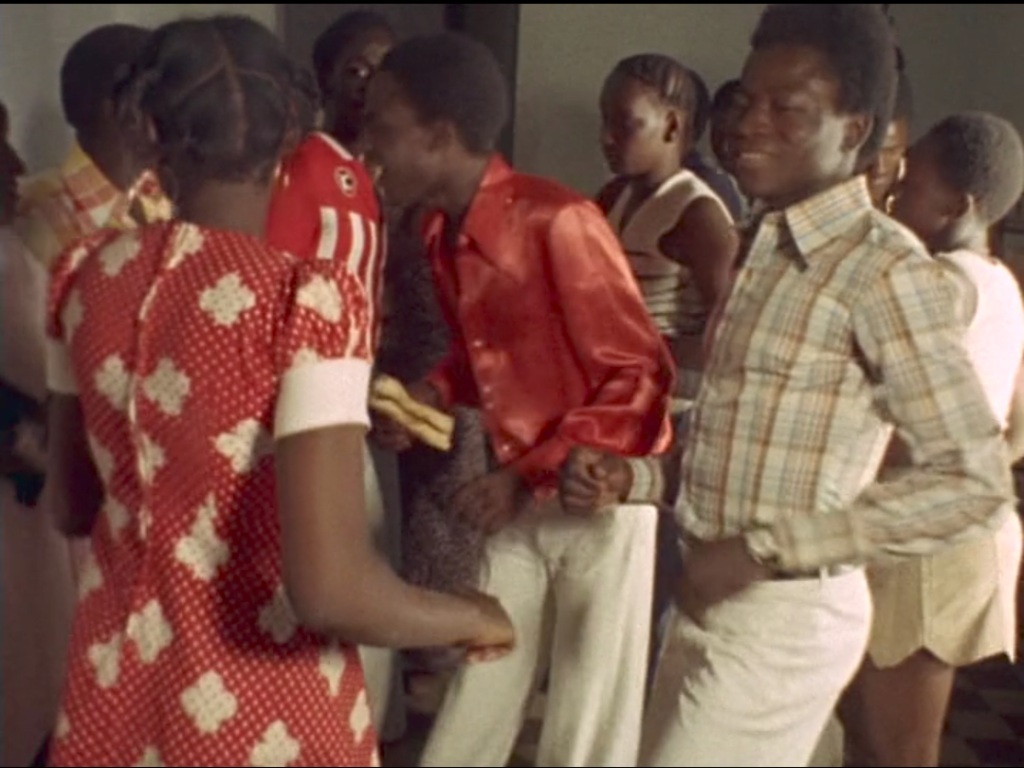
The film follows Ténin, a young mute daughter of a rich businessman, as she navigates life as a youth in 1970s Mali. Her slightly older and more much more experienced cousin, Adam, introduces her to the happening side of Bamako featuring parties, alcohol, and boys, and we watch as Ténin slowly immerses herself in her new culture. A leading figure within the merry youthful scene is Sékou, a worker from the lower class who was recently fired by Ténin’s father from his factory. Despite his social status, Sékou seems to have his way with the girls, and after Adam travels, he sets his eyes on Ténin.
When the youth organize a get together at an isolated bank on the river Niger, Sékou takes Ténin along with him. However, the moment they arrive at the venue, she is pushed into the river by some of the youths but is thankfully rescued by Sékou. Once he gets her to shore, he begins making attempts to undress her. Realizing his intentions, Ténin rejects his advances, but he forces his way and rapes her. This results in a pregnancy which sends her entire family into crisis. When her father kicks her out and Sékou denies his role in her ordeal, Ténin is forced to confront her situation in the most desperate of ways.
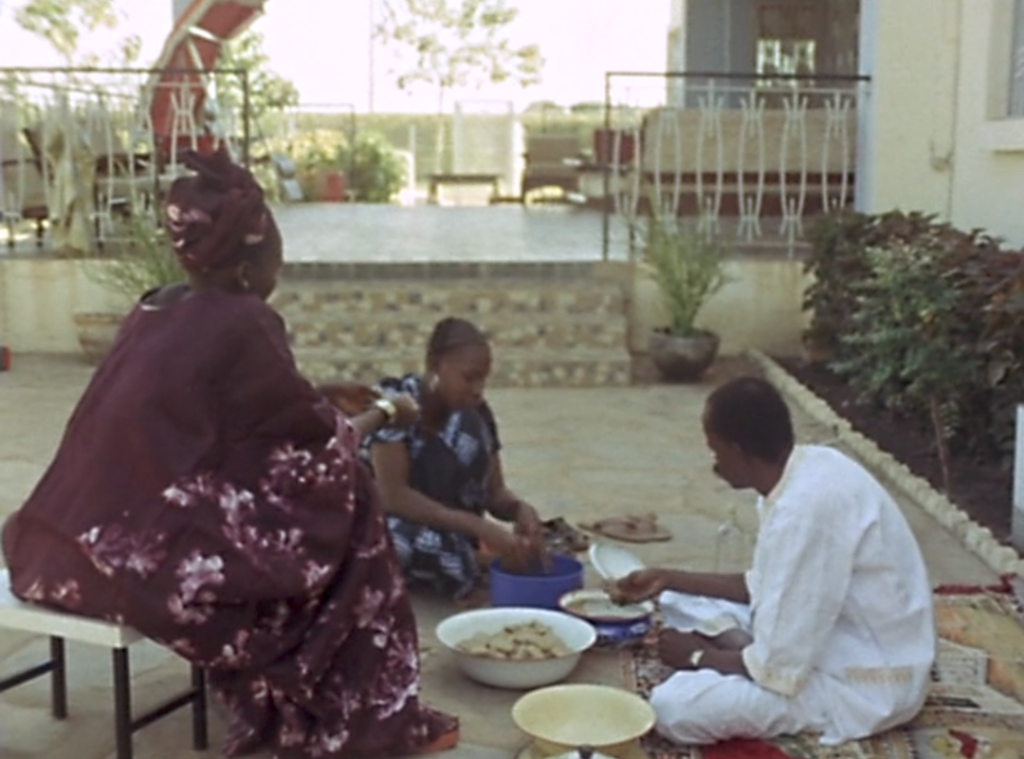
The theme of class relations which would feature heavily within his subsequent work is first explored by the director in this film, and his strong feelings towards the subject is shown in the way he addresses it head on. Cissé’s delicate approach to dialogue and his tendency to linger softly on each scene shows that the decision to adopt this brash attitude towards class relations was deliberate. The film opens with a shot of laborers who are ultimately unimportant to the story, and in every scene where a worker appears in the course of duty, the camera waits and watches in silent salute. The rich businessman appears on screen only when he furthers the story, and a blatant clash of classes occurs in one of the earliest scenes where Sékou is fired from his job.
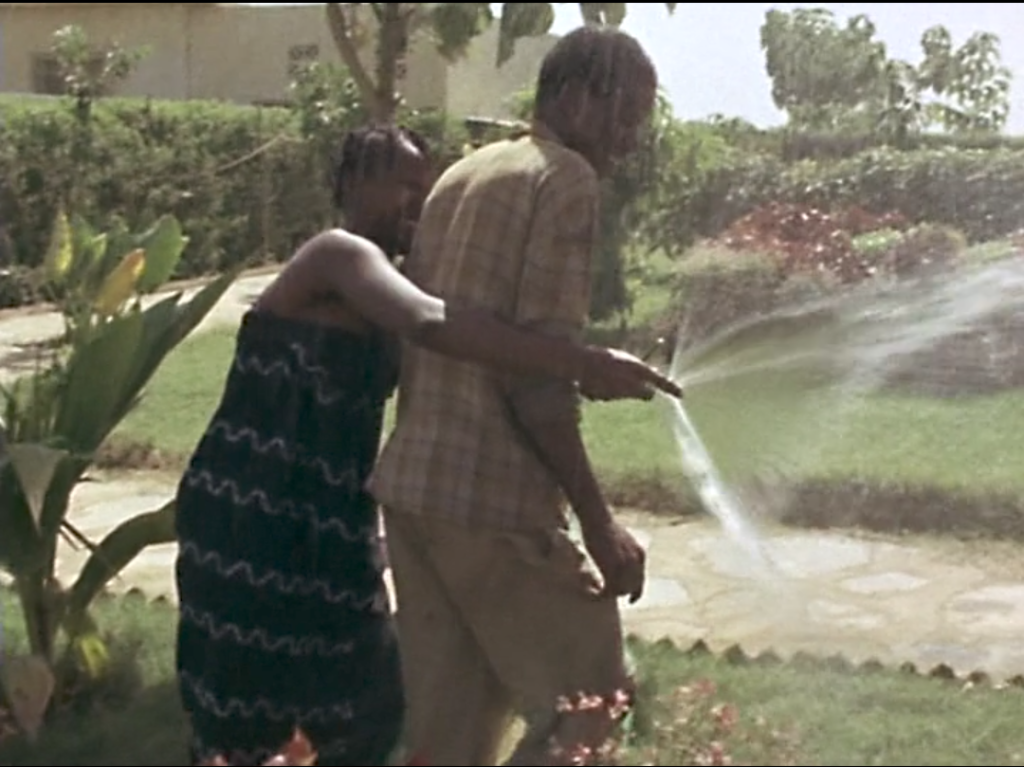
Ténin is a sort of a bridge between both classes, and unlike her father who stops short of despise for the lower class, and her mother who barely notices them, she manages to function as part of a community within both. A scene where she instigates a playful game of pursuit with her maid and hides behind their gardener may have been Cisse’s admission of the possibility of a cordial relationship between the classes.
The films dialogue is entirely in Bambara, the most widely spoken language in Mali. It was the first feature length film to be shot in the language, and in doing so, Cissé was taking a great risk. Although the pioneering directors of African cinema were making culturally relevant and poignant films, the languages of the colonial powers had become so entrenched in the consciousness of the continent that they usually functioned as the vehicle through which the stories in these films were told.1 Also, since those filmmakers needed to appeal to a wide international audience to stand any chance of distribution and commercial success necessary for the sustenance of a fragile industry in its infancy, it was wiser to use colonial languages to connect with foreign markets. Thus, it was unusual to find a feature debut entirely in a native language during that period (only Oumarou Ganda’s 1968 effort, Cabascabo, comes to mind, although some may classify it as a short film), but Cisse was not one to conform.
Cissé’s display of boldness goes beyond the choice of language. The subject of teenage or unplanned pregnancies had been tackled by African directors prior to Den Muso, but Cissé’s approach to the rape scene may have been a little too realistic for the time. Credit must be given to Mamoulou Sanogo, who plays the part of Sékou with a disturbing air of familiarity that allows him transform Sékou from a barely bearable nuisance in the mind of the audience into a despicable swine within seconds.
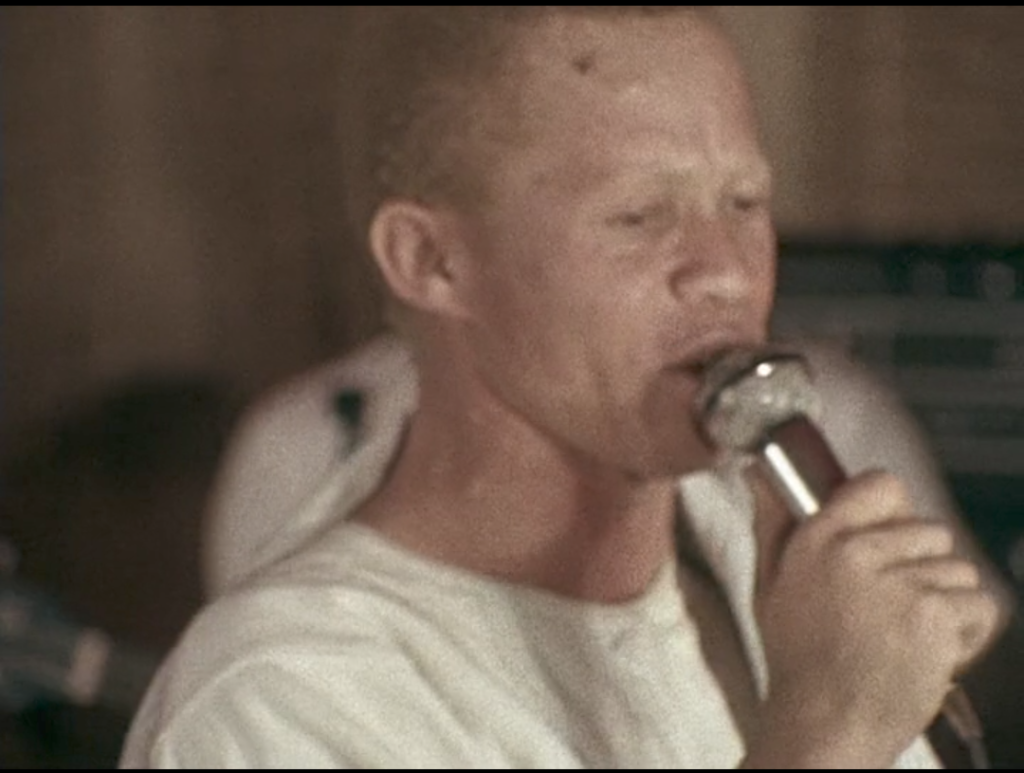
Apart from Sanogo’s, the performances of Dounanba Coulibaly as Ténin and Balla Moussa Keïta as her father must be singled out. The transition from a naïve child to a scornful mother-to-be is executed with quiet grace by Coulibaly, and Keïta, who would go on to be one of the most recognizable faces in African cinema, plays his character with a total arrogance that makes the audience despise not just him, but the capitalism that he represents from the very beginning. Worthy of mention is the cameo by a young Salif Keita (before the launch of his solo career) as part of a live band, and the legend known as the Golden Voice of Africa serenades the audience with a rendition that, along with the tragedy unfolding on screen, may put viewers at risk of shedding a few tears.
As was the experience of many directors during the early period of the continent’s cinema, Cissé faced censorship problems when the film was released. He was thrown in jail for ten days on the order of the Minister of Culture in Mali for accepting French funding for the film, being released only after Moussa Traoré, the military dictator who was Malian head of state at the time, intervened. The film was still banned for three years, and in response to this act of censorship, Cissé, along with some of the cast and crew from Den Muso teamed up once again to make Baara, the film that would truly launch his career.
Cissé is currently in his eighties, but he remains a pillar of African and world cinema, functioning as the director of the Union of Creators and Entrepreneurs of the Cinema and Audiovisual Industries of Western Africa and serving on the advisory board of Martin Scorcese’s World Cinema Project. Den Muso is available to stream on Filmingo in selected regions. A copy of the film may also be ordered online, and if you have not seen it yet, we urge you to!
Feel free to share your thoughts about the film in the comment section.
Footnote
- See Decolonising the Mind: the Politics of Language in African Literature, a collection of essays by Kenyan novelist, Ngũgĩ wa Thiong’o, for insight on the influence of the languages of the colonial powers on African art. You may also see Politics and Politicians of Language in African Literature, an essay by Nigerian novelist, Chinua Achebe, for his thoughts on the subject. ↩︎

