
Title: Mister Johnson
Director: Bruce Beresford
Year of Release: 1990
Language: English
Run time: 97 minutes
“I don’t mind dying, but I don’t want to say goodbye.”
Very few films are as anticipated as a director’s follow-up to an Academy Award for Best Picture winner. Different directors handle the pressure differently, and for Bruce Beresford, the director of the 1989 winner Driving Miss Daisy, he made the interesting decision to travel all the way to Bauchi in Northern Nigeria to make a film based on Joyce Cary’s 1938 novel “Mister Johnson”.
No major foreign production had been shot completely in Nigeria prior to this venture (Ossie Davis’ Countdown at Kusini was shot in Lagos in 1974, but it was not a major Hollywood production and Michael Raeburn’s internationally financed 1988 film Soweto was shot partially in Nigeria, but it remains unreleased due to legal rights issues), but Beresford’s choice, as random as it seems, was not so random at all. Before embarking on his illustrious career in Hollywood that saw him make films like Tender Mercies (1983) and Double Jeopardy (1999), he had answered a job advertisement and moved to Nigeria in 1964 to work for two years in Enugu as a film editor. Here, he made one of his first short films, King-Size Woman, which showcases the dazzling large buses of Eastern Nigeria and features the nostalgic sounds of Sunny Okosun’s rock band, Postmen. Thus, he was no stranger to the country, and in deciding to shoot his film in Nigeria, he was giving the country its first major Hollywood production, and in the process, granting local film professionals the opportunity of a lifetime.
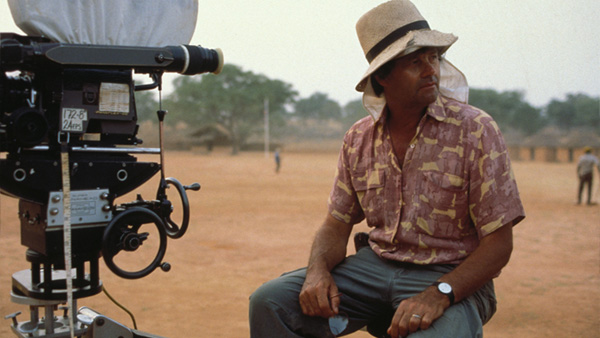
Nigeria is usually a leading force in most of Africa’s ventures, and while its film industry is currently among the largest in the world in terms of volume of productions, its stature in conversations on the early stages of African cinema is easily dwarfed by the exploits of other countries like Senegal and Burkina Faso (Nigeria was more famous for theatre productions during this period). The country’s cinema picked up incredible pace in the 80s and 90s, and some figures instrumental in this surge cut their teeth on the production of Mister Johnson.
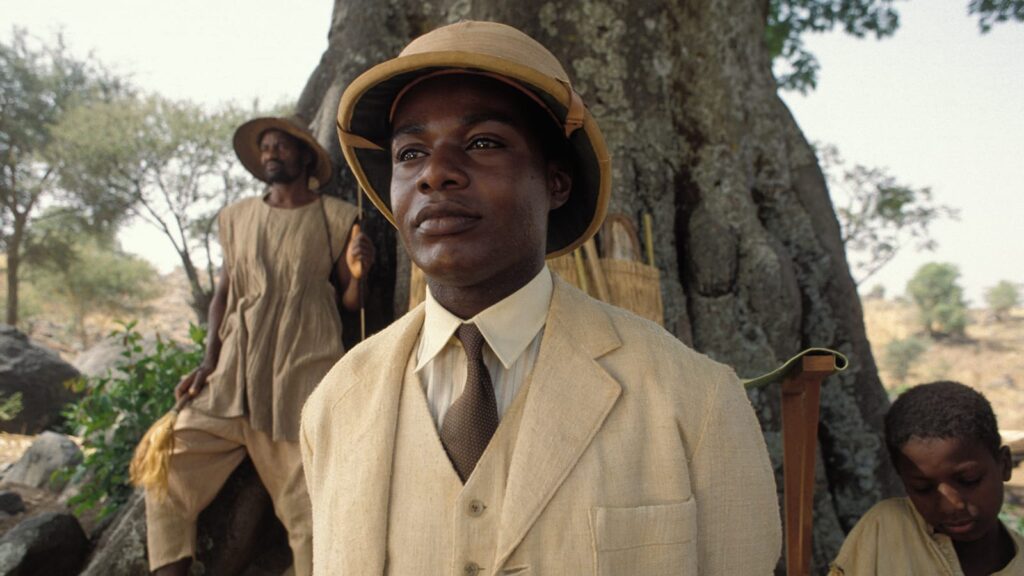
Set in 1920s colonial Nigeria, the film follows the eponymous character (played by Maynard Eziashi in his debut film role which bagged him a Silver Bear for Best Actor at the 41st Berlin Film Festival), a local clerk with the British colonial government in Fada, Nigeria, as he serves his beloved masters enthusiastically while taking advantage of his unique position to cater to whims of his financial indiscretions. Mister Johnson adores everything British, and although he has never stepped foot in England, he carries on as if he were raised within the confines of Buckingham palace. He adores Harry Rudbeck, the District Officer for Fada (played by future James Bond star Pierce Brosnan) under whom he works, but when his antics get him sacked, he has to work for the erratically racist trader, Sargy Gollup. His antics also get him fired from Gollup’s service, and he manages to find employment once again with Rudbeck.
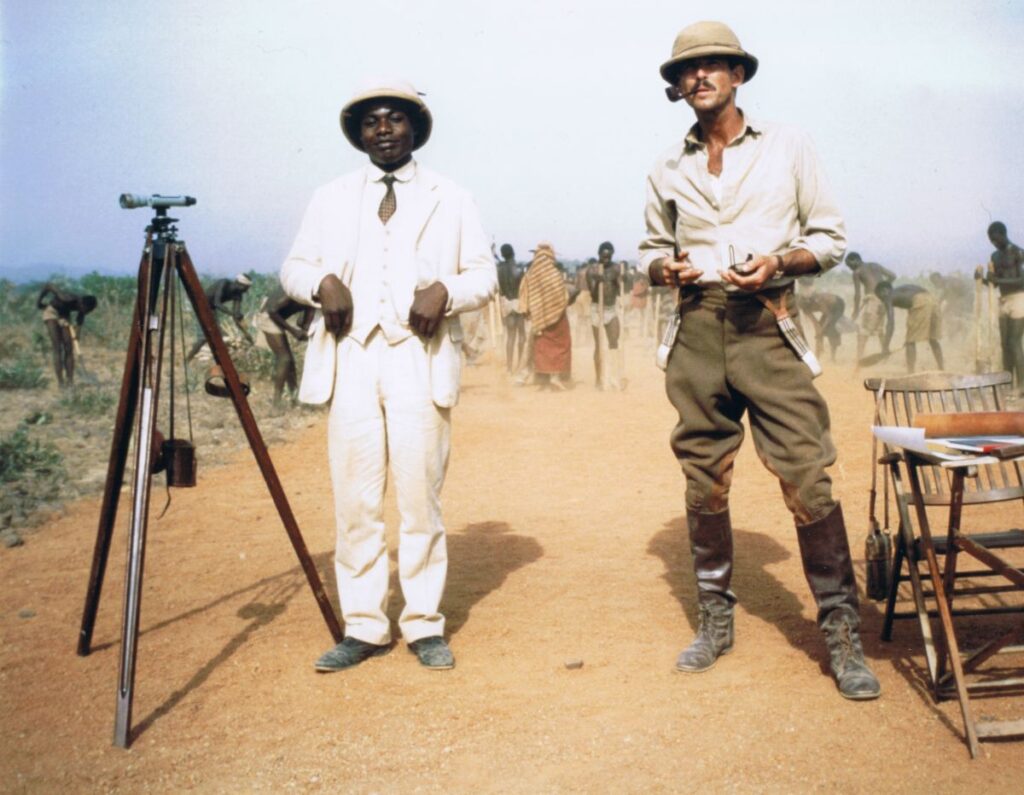
Unsurprisingly, his tendencies get the better of him, and after being dismissed by Rudbeck once more, his life quickly takes a quick turn which leads him towards unforeseen outcomes, and the film ends on a much different note to the comically adventurous one on which it begins.
The film is visually captivating thanks in no small part to the decision to shoot on location. This helped in rendering an authentic feeling bolstered by the efforts of Peter James, the same cinematographer that Beresford worked with on Driving Miss Daisy, who works with the desert to evoke accurate images of 1920s colonial Nigeria, managing to find interesting angles to merge the dry and ancient settings with the colorful characters and costumes.
The use of local actors minimizes the problems that films set on foreign soil usually encounter in terms of local languages and dialects (all three major Nigerian languages featured in small parts in the film, and they were spoken by native speakers) and very interestingly, the clash of cultures, which is usually a major theme in such films is portrayed with a perfect blend of sincere and comic elements that make it thoroughly enjoyable.
Particularly, one of the earlier scenes shows Rudbeck debating with the Waziri (adviser to the local ruler) about the punishments for prostitutes in the town. The Waziri suggests the local age-old practice of public flogging, which Rudbeck dismisses as utterly barbaric. However, when Rudbeck suggests the western practice of imprisonment, the Waziri, horrified at such a suggestion, accuses the western system of constituting abominable cruelty! This scene, while not central to the story at all, perfectly illustrates the fact that the question of civilization is usually answered subjectively; a fact that the colonial powers failed to take into consideration during their dealings with Africa as a whole.
As earlier stated, Mister Johnson holds a special place as the first major foreign film shot in Nigeria. While the general production team was led by foreigners, the production employed a host of local talent both behind and in front of the screen, and this exposure to the possibilities of large-scale filmmaking was essential, both mentally and otherwise, for the future leaders of the country’s cinema. Chief Hubert Ogunde (who died ten days after filming wrapped), generally regarded as the father of Nigerian theatre, was central to the success of the production, and he appeared in a cameo role as Mister Johnson’s father-in-law. He ensured that many local talents availed themselves of the opportunity to work on the film.
Matt Dadzie a veteran actor, director, and producer with the Nigerian Television Authority served as a location manager and also appeared in the small role of a prison guard; Fabian Adibe (who appeared in the 1985 television adaptation of Chinua Achebe’s Things Fall Apart, and also served as art director for the Nigerian scenes shot for the earlier mentioned and unreleased Soweto ) served as art director; Pat Nebo, who went on to work as art director and production designer on major local productions like Kunle Afolayan’s The Figurine: Araromire (2009) and Izu Ojukwu’s ‘76 (2016), worked on the costume team; and Tunde Kelani (arguably Nigeria’s greatest film director) served as a third unit director and appeared in the small role of Jamesu, Mrs Rudbeck’s maid.
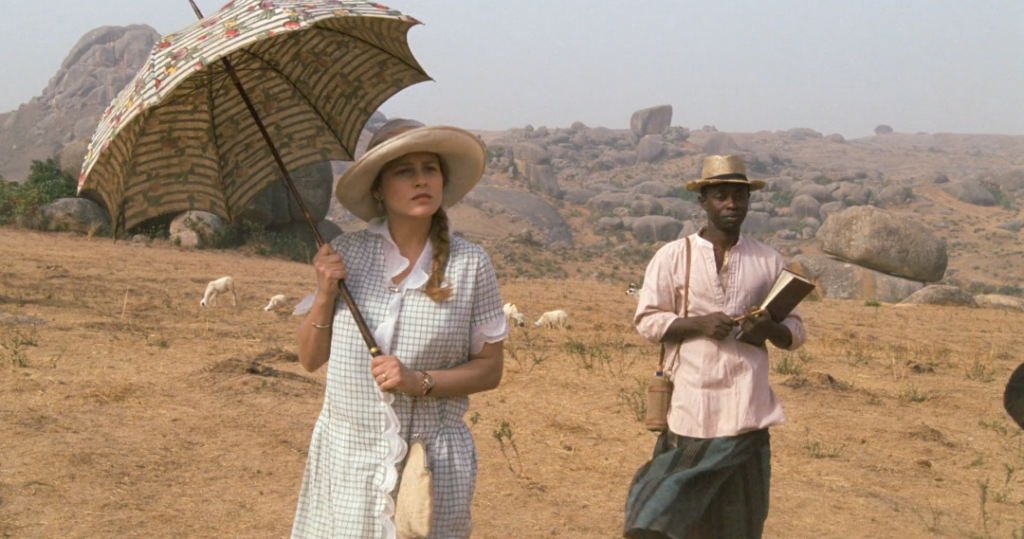
Cary’s novel has been criticized for painting a degrading picture of the African man, and while there are certainly merits to this argument, Beresford and Eziashi combine their powers to portray Johnson not as a bumbling and dishonest native, but as a man like any other, with a lot of heart and the proclivity to explore any means necessary to get what he wants. Regardless of one’s opinion on the source material, the decision of the producers to make the film in Nigeria and with a majorly Nigerian cast and crew is not only commendable, but it was invaluable for the development of some of the country’s great talents of the stage and screen.
Mister Johnson did not receive the same exposure as Beresford’s immediately preceding best picture winner (partly because the film’s distributor for the United States filed for bankruptcy shortly before the film’s release), but Beresford himself declared Mister Johnson to be one of the best films he ever made. Mister Johnson is available in the Criterion Collection as well as on Amazon Prime and Apple TV. If you have not seen it yet, we urge you to!
Let us know what you think about the film in the comment section.

