
Title: Sambizanga
Director: Sarah Maldoror
Year of Release: 1972
Language: Portuguese, Kimbundu, Lingala
Run time: 102 minutes.
“You’re with the Whites! You make all of us suffer.”
Most of the Portuguese colonies in Africa had to experience armed conflict before they could gain independence, and the Angolan struggle for independence was the longest of these wars. These struggles were in response to the harsh policies and treatment of natives by the Portuguese colonial government, and while some revolutionaries fought with guns and machetes, others, such as Sarah Maldoror, employed other means of expressions to confront the colonial power.
Maldoror was born in France to a Guadeloupean father and a French mother, and while she grew up and received her film education in Europe, her career truly began in Africa. She had worked as an assistant director on the Oscar nominated The Battle of Algiers (1966), and her first short film, Monangambé (1968), was shot in Algeria. She had also shot a feature length film in Guinea-Bissau which was funded and later confiscated by the Algerian government before completion because she focused on the female perspective, which was contrary to the wishes of the government, and when the time came for her to make her own film, she did not compromise her vision.
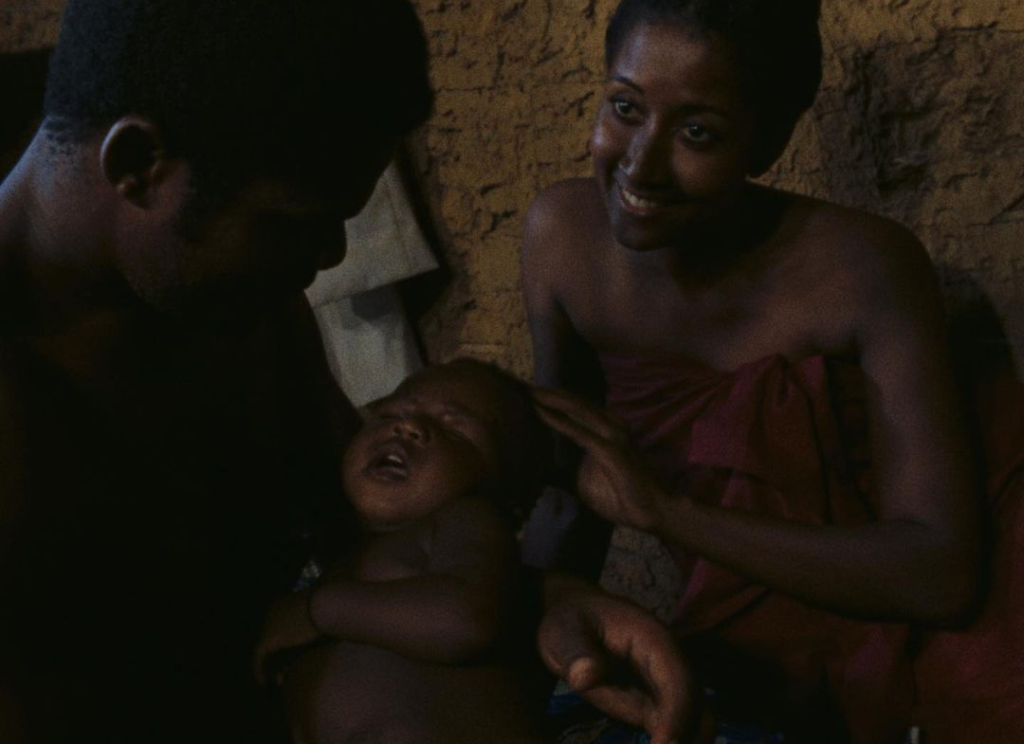
Sambizanga is set in 1961 Angola, and it follows the underground independence movement through agents of the People’s Movement for the Liberation of Angola (MPLA). Domingo, a tractor driver and the leader of the construction group of the movement, is captured from his home by the colonial police and transported to a notorious prison in the Sambizanga district of Luanda. His wife, Maria, begins the long search for her husband, carrying their newborn son, Bastiao, on her back as she journeys to Luanda.
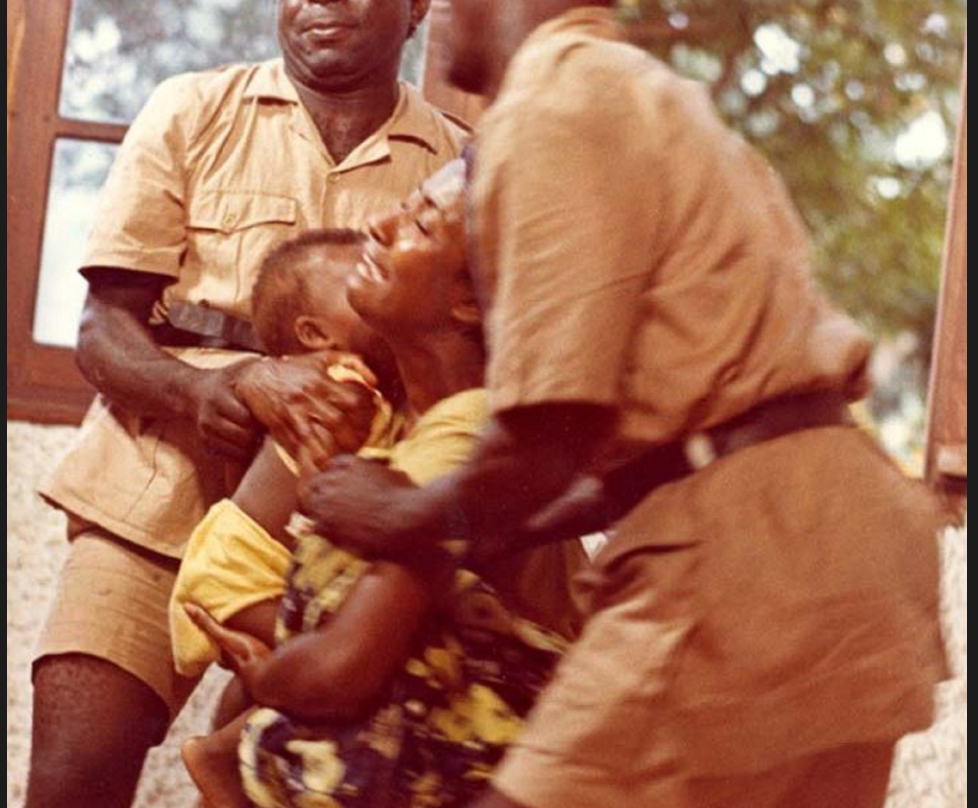
In the prison, Domingo is beaten, starved, and tortured by the officials to get him to divulge information about the underground independence movement. Specifically, they want him to reveal the identity of a white MPLA collaborator, but despite all his suffering, he remains steadfast to the cause. Meanwhile, the MPLA faction in Luanda learns of Domingo’s imprisonment, although they are unable to ascertain his identity. Maria visits various prisons in Luanda, crying and screaming for Domingo’s release to no avail. She is determined to continue her search at all costs despite the derogatory treatment she faces at the hands of the officials.
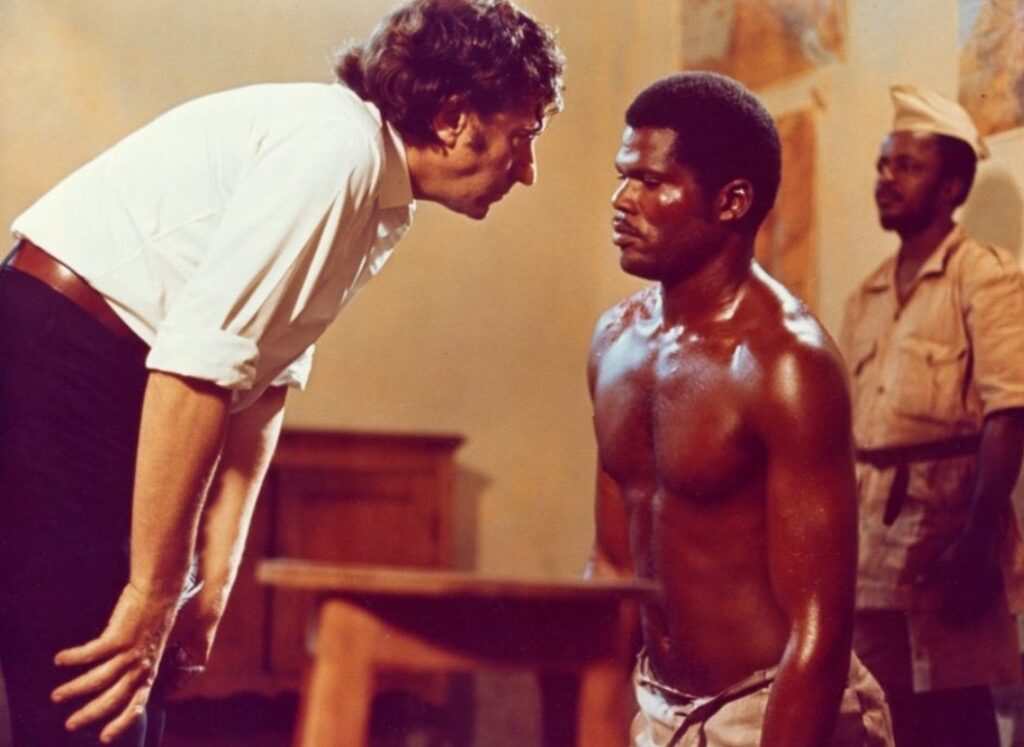
When Maria eventually finds the prison where Domingo is held, her efforts are rewarded with painful news. The MPLA also successfully discover the prisoner’s identity, although they are unable to intervene in time. The film ends with members of the MPLA at a clandestine meeting where they agree to storm the prisons in Sambizanga on the 4th of February 1961, an event that would change the course of history for Angola.
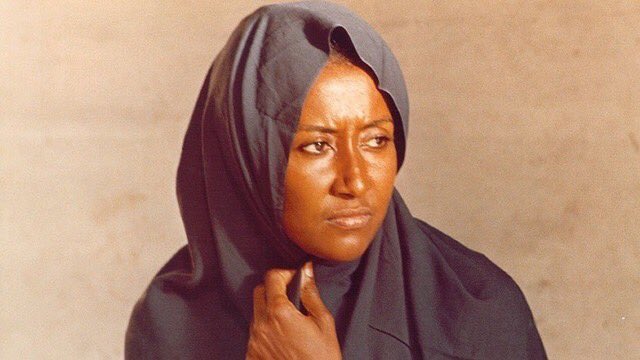
Sambizanga is considered to be the first feature length narrative made by a woman in sub-Saharan Africa, and Maldoror ensured that the roles of women in the liberation struggle would be heavily reflected in the story. Maria, played by Elisa Andrade (the Cabo Verdean actress who had also briefly featured in Monangambé), encapsulates the spirit of resilience and determination required for a confrontation with the colonial government, and her courage when faced with opposition is a symbol of the defiance that characterized the Angolan struggle for independence. While she was a trained economist, Andrade showed that she was made for the screen, complementing the incredible efforts of the woman behind the camera by displaying raw prowess in front of it.
Maldoror could see herself in Maria, especially because her real-life circumstances paralleled those of her protagonist. Maldoror was married to Mário Andrade, the Angolan poet and revolutionary who was the first President of the MPLA. Her husband was always facing the threat of arrest or worse from the Portuguese colonial government, and the family even had to flee to Algeria in the 60s to escape persecution. She contributed to the struggle by furthering the cause of the revolutionaries through film, and her dedication is reflected in the lengths she was willing to go to make these films.
Sambizanga was made while the Angolan revolution was still ongoing, so it was impossible to shoot on location in Angola. Maldoror decided to shoot in Republic of the Congo, and the cast consisted of many people who were involved in the Angolan struggle for independence. The film, like Monangambé, was adapted from a novella by José Vieira, who had been imprisoned for over a decade for associating with revolutionaries at the time the film was made. The novella had not even been widely published when filming began, having only been distributed discreetly by Mário Andrade due to fears of censorship, and Sambizanga was to suffer a similar fate.
The film was censored in Portugal and Angola, only being released in 1974 after the Portuguese Carnation Revolution. José Vieira was also released after this revolution, and his novella, A Vida Verdadeira de Domingos Xavier, from which the film was adapted, was finally published around this time. Despite the censorship efforts of the colonial power, the impact of the film could not be stifled, and Sambizanga remains one of the seminal works of African and revolutionary cinema. Angola gained its independence in 1975, one year after the film was released in the country, and this was the ultimate reward for the revolutionary efforts of Maldoror, her cast and crew, and every other person that contributed to the struggle.
Sambizanga was one of the winners of the Tanit d’orat the 4th Carthage Film Festival in 1972, and although Maldoror went on to make many more works, Sambizanga was the only feature narrative film of hers that was released. Most of her other works were short or feature length documentaries commissioned for television, and while she lived until the age of 90 (passing away after a COVID infection), her works became widely known only after her death.
Sambizanga was restored in 2021 thanks to efforts by Maldoror’s daughter, Annouchka, the Film Foundation’s World Cinema Project, and the Cineteca di Bologna. The film is currently available on the Criterion Channel, on Prime Video in select territories, and may be purchased on Amazon. If you have not seen it yet, we urge you to!
Let us know what you think about the film in the comment section.

