
Title: Kaddu Beykat (“Words of the Farmers”)
Director: Safi Faye
Year of Release: 1975
Language: Serer, French
Run time: 93 minutes.
“When a woman gets old and becomes weak, the village girls come to her help. That is the custom.”
Twelve years after Senegal blessed us with what is widely considered to be the first film made by a black African man within the continent (Sembène’s Borom Sarret), the country delivered once again, giving us the first commercially distributed feature film by a black African woman. Prior to Kaddu Beykat, no sub-Saharan African woman had managed to make a commercially distributed film, and as another pioneer woman filmmaker, Thérèse Sita-Bella, put it, cinema was not really a woman’s business in Africa of the 60s and 70s.
Safi Faye was a teacher in Dakar when she met the French filmmaker and anthropologist, Jean Rouch, at the 1966 First World Festival of Negro Arts, and she went on to work with him (most notably as an actress, starring as the uninhibited, swaggalicious, and sexy Safi in Petit à Petit) and learn invaluable techniques that were to come in handy later in her career. Although she returned to Dakar after filming Petit, she quickly went back to France to study, and it was during this period that she made her first short film, La Passante (1972), in which she also starred.
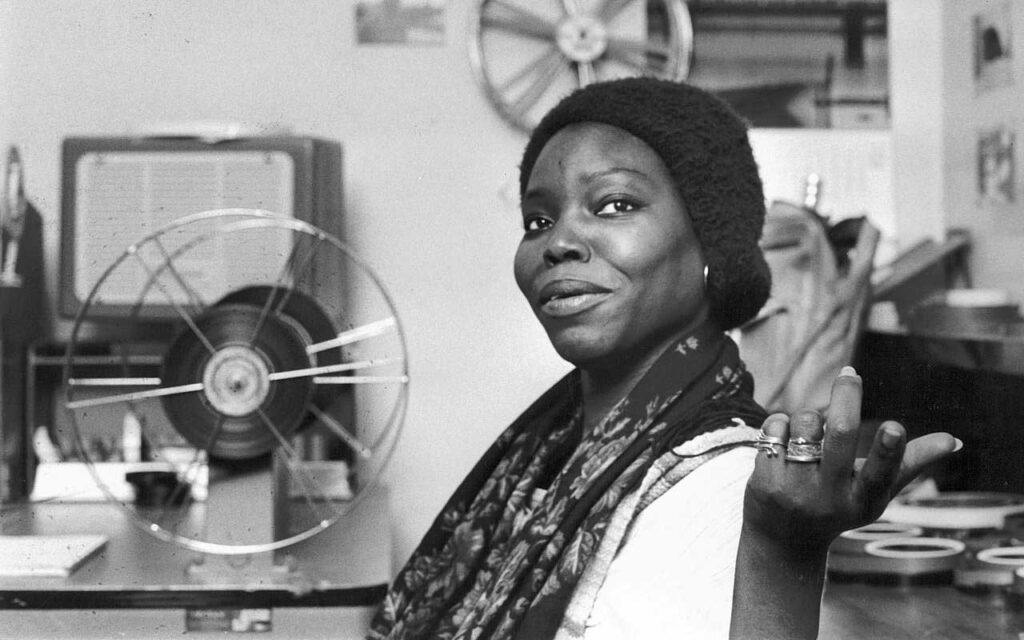
When she decided to take the bold step of making a feature film, she returned to her native Senegal to engage in an endeavour that, at that time in Africa, was only undertaken by men. By returning to her own village to film her own people, she was telling the most original story a director could tell. By virtue of her background in ethnography, she adopted a unique docufiction approach that allowed her to tell a true and fictional story at once in the spirit of cinéma vérité.
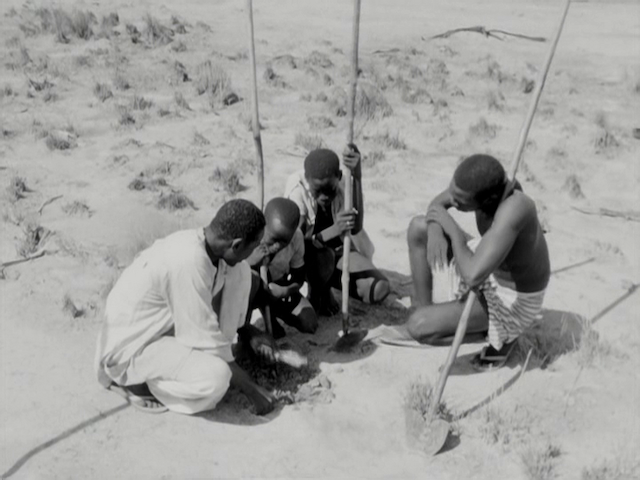
Kaddu Beykat follows the inhabitants of Fad’jal, a small Serer village in Senegal, as they go about their daily activities amid a drought. As a community totally reliant on farming, the drought is heavily affecting their livelihood, and in the midst of all of this we are introduced to Ngor, a young villager who is keen on marrying Coumba, his cousin. The difficulties brought about by the drought are threatening his prospects of affording the wedding, and he decides to move to the big city in hopes of bettering his fortunes.
When Ngor leaves, Coumba becomes so heartbroken and depressed that her mother takes her to the village medicine man for traditional therapy involving animal sacrifices and purification baths. Meanwhile, Ngor is clueless in the big city, experiencing problems in fulfilling simple tasks like crossing the busy streets of Dakar which are filled with fast moving cars, which are in sharp contrast to the quiet and fallow lands back in his village which are occasionally traversed by slowly paced cows and livestock. He spends the day searching for jobs until he eventually finds work as a maid and cook. However, he is fired after just a day’s work, having been taken advantage of by a woman who just needed her house and car cleaned; his introduction to city life.
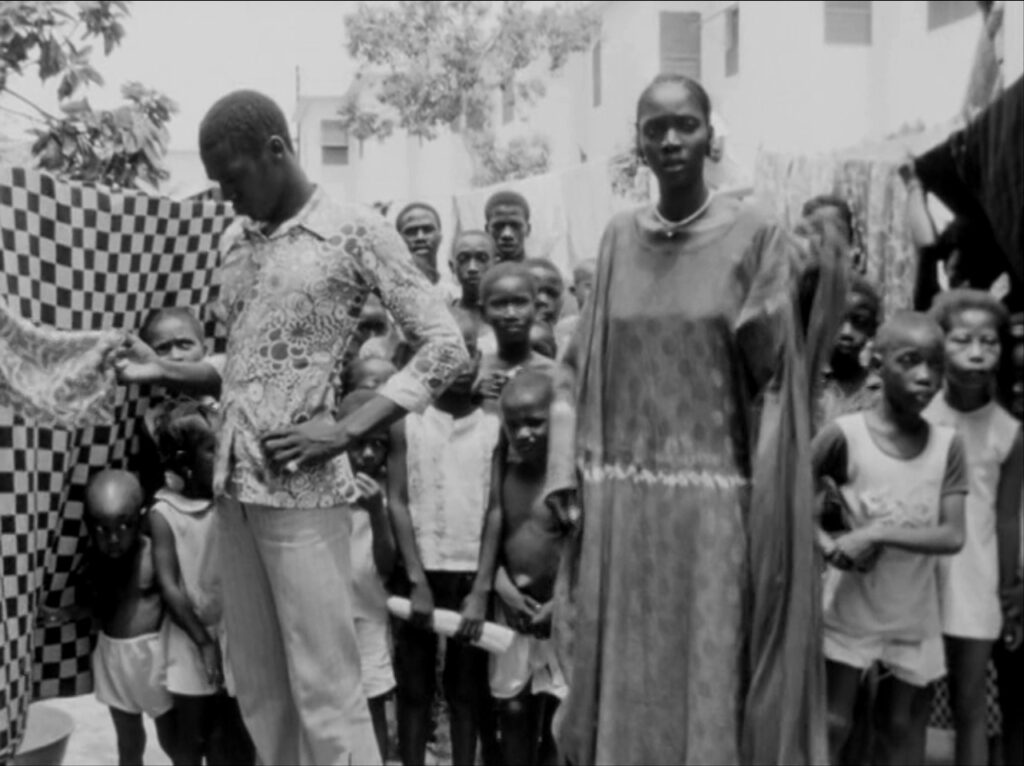
Ngor eventually finds a steady job and begins sending money home, and when the time for harvest finally comes, he goes back to help. It turns out that Ngor’s return was all that was needed to cure Coumba, and Ngor’s father manages to offer a sheep for their union, ensuring that the couple finally get married. Later, Ngor attends a meeting of the men in the village, and, by virtue of his new status, he is able to contribute to discussions about the future of the village. The film ends with Faye telling us that the film is a letter to us from her and her village.
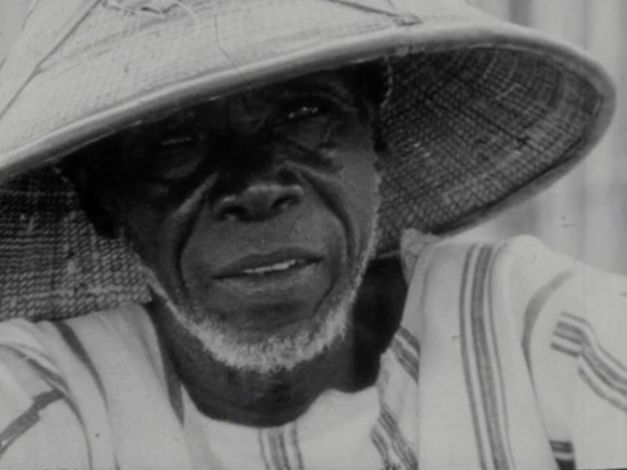
Faye accomplishes the difficult feat of making the film simple without being basic. It was shot in three weeks with limited crew and equipment, and most of the actors were actual villagers, including her grandfather who died 11 days after filming and to whom the film is dedicated. Only a few of the actors had any significant acting experience (for instance, Assane Faye who plays Ngor previously played a minor role in Mambéty’s 1973 film, Touki Bouki). This meant that Faye did not have to struggle to convey any feelings of authenticity, and for the 90 minutes of the film the audience feels like they are part of the village.
Faye aimed to give a voice to her people so that they could express their problems, and significant portions of the film are dedicated to scenes criticising the Senegalese government’s agricultural policies which were vestiges of the colonial era. These criticisms were not hidden in metaphors or symbolisms as many films are wont to. Instead, they were blatantly expressed through the speeches of those directly affected by the harsh policies and practices, making sure that the government got the message loud and clear. The message was immediately received and promptly responded to. Unsurprisingly, instead of addressing the unfair policies, the government banned the film in Senegal. Thus, the first feature film made by a black African woman was not allowed to be seen by the people for whom it was made. However, Faye was confident that her film was going to stand the test of time, commenting in an interview with Ferid Boughedir that she was sure the film would eventually be shown widely in Senegal.
Unfortunately, while film historians and enthusiasts may be familiar with the film, most of the world is unaware of Kaddu Beykat or the other works of Faye. Even when one becomes aware, it is currently almost impossible to access her work. For the lucky few, it may be possible to catch a screening of her film(s) at retrospectives or special screenings during esoteric or invite-only festivals or events across America or Europe. However, the African audience has very little hope of viewing this film, denying this demographic of the opportunity of experiencing a pivotal piece of their history. This also means that the film cannot have the inspirational impact that such pioneering efforts usually enjoy among subsequent generations, and it cannot form part of the seminal works that must be viewed by aspiring filmmakers within the continent (especially women filmmakers), because there is simply no way for them to watch it.
Currently, the rights to Faye’s film are with a European company, as is the situation with many of the earlier African films. The chances that these distributors would make these films available to the African audience are always very slim since there are little prospects of financial profit from such an endeavour. Thus, the disconnect between the African audience and its cinematic history continues to endure, depriving legends like Faye of the recognition and reverence that they deserve.
Kaddu Beykat enjoyed critical acclaim upon its release, and it was one of three films awarded the FIPRESCI prize at the 26th Berlin Film Festival in 1976. The film also won the Georges Sadoul Prize at the 5th FESPACO in 1976. Kaddu Beykat is not available for purchase or streaming, but it is shown sporadically at film festivals and forums mostly in Europe. The film was shown very recently at the 74th Berlin Film Festival in February 2024 as part of a retrospective on Faye’s work to celebrate the one-year anniversary of her passing, and if you ever get the chance to see it, we urge you to!

