
Director: Ousmane Sembène
Year of Release: 1963
Language: French
Run time: 18 minutes.
“This is jail. This is modern life. This is the life in this country.”
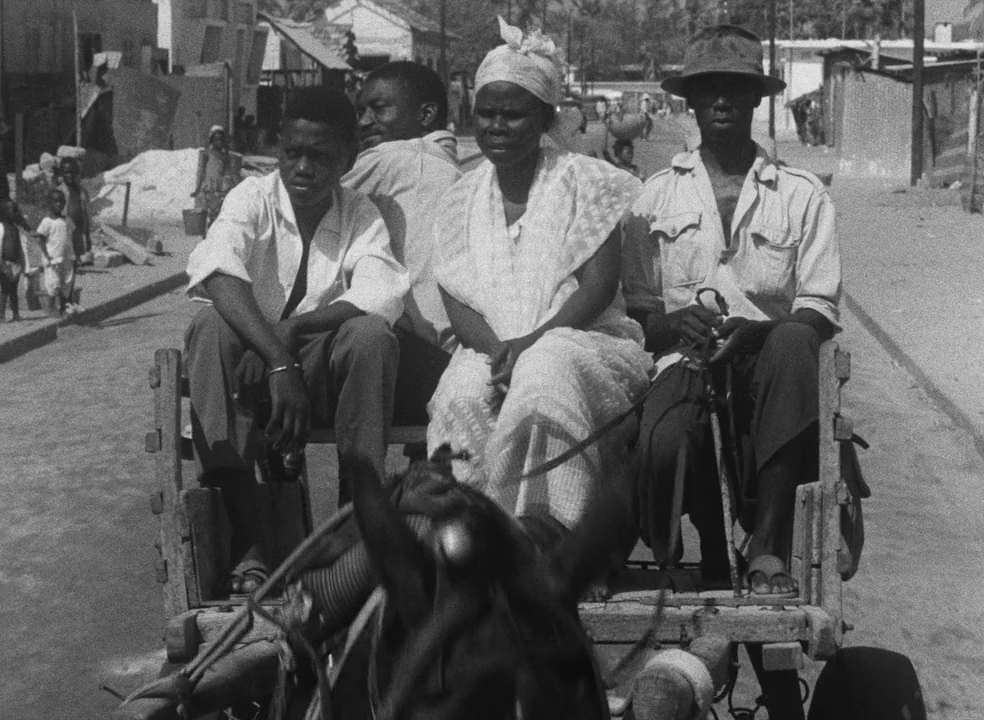
When we were deciding on the first film to be considered on this forum, we did not have to think too hard. Considered to be one of the first films made in Africa by a Black African, Borom Sarret is undoubtedly one of the most important films in African Cinema, if only because it serves as the filmmaking debut of Ousmane Sembène (the first film he shot was L’empire Songhaı also in 1963, but it has never been released). While he was not the first African to direct films, no one can really have too many issues with the fact that Sembène is constantly referred to as the ‘Father of African Cinema’.
Before venturing into filmmaking, Sembène established himself as a novelist, having already published a few novels, including Les Bouts de Bois de Dieu (1960), an undisputed classic of African literature. However, there were a handful of established literary figures at the time, but this could not be said about cinema. One major reason for this, at least in the parts that had been under French colonial rule, was the Laval Decree of 1934 which, among other things, banned members of the colonies from making “cinematographic images or sound recordings” of themselves. The 1950s and 60s witnessed a sustained wave of successful independence movements around the continent, and Senegal gained its independence in 1960, the same year that the Laval Decree ceased to operate.
As the former colonies were released from the shackles of that evil legislation, many creatives within these former colonies were itching to showcase the many facets of the African experience through the medium of film. Sembène was one of these creatives, and when he was finally presented with the opportunity to helm a piece that was totally at his discretion and free of any external and unwelcome regulation, he delivered in the form of Borom Sarret.
One can assume that when Borom Sarret was finally released, the audience at the time knew straight away that they were watching a master at work. The film was one of the first instances of an African exploring the creative extent of cinema in telling a completely African story, and Sembène, who clearly understood the pioneering venture that was being undertaken, was eager to show us the power of the medium.

Set in Dakar, the beautiful Senegalese capital, in the early period of Senegalese independence, the film gives us a brief but very eventful glimpse into a day in the life of an unnamed wagoner. Our protagonist transports locals through the rural areas of Dakar in his cart, which is pulled by Albourah, his workhorse and, in many cases, sole confidant. Sembène makes us privy to the thoughts of the wagoner, and these series of internal deliberations and observations, coupled with the outstanding visual journey through the city, gives us a clear picture of the African reality at the time. The wagoner is clearly a religious man on the outside, beginning his day by saying his prayers and slipping on his talisman before heading out to work, but his thoughts are just as spiteful as that of the average man. He barely has anything good to say about any of his passengers, and he is ultimately enticed to break the law by the prospect of receiving a handsome payment from a shady looking passenger. He asks his god to protect him as he undertakes the illegal journey, but the consequences of his action soon catch up with him and he returns home even more empty handed than he had been when he left.
As simple as the plot sounds, Sembène manages to treat a plethora of subjects in a little under twenty minutes, and he still has enough time to squeeze in a memorable rendition of a griot’s song praising the wagoner’s ancestral roots. This scene is especially relevant because it is one of the first appearances of the African griot in film, a character that will eventually go on to become a staple in subsequent African cinematic endeavors. Sembène himself featured griots in films like Xala (1975) and Ceddo (1977), and many other filmmakers such as Souleymane Cissé in Baara (1978), Desiré Ecaré in Visages de Femmes (1985) and, of course, Fadika Kramo-Lancinè in Djeli (1981) paid tribute to this pivotal cultural vocation by featuring such characters in their films.
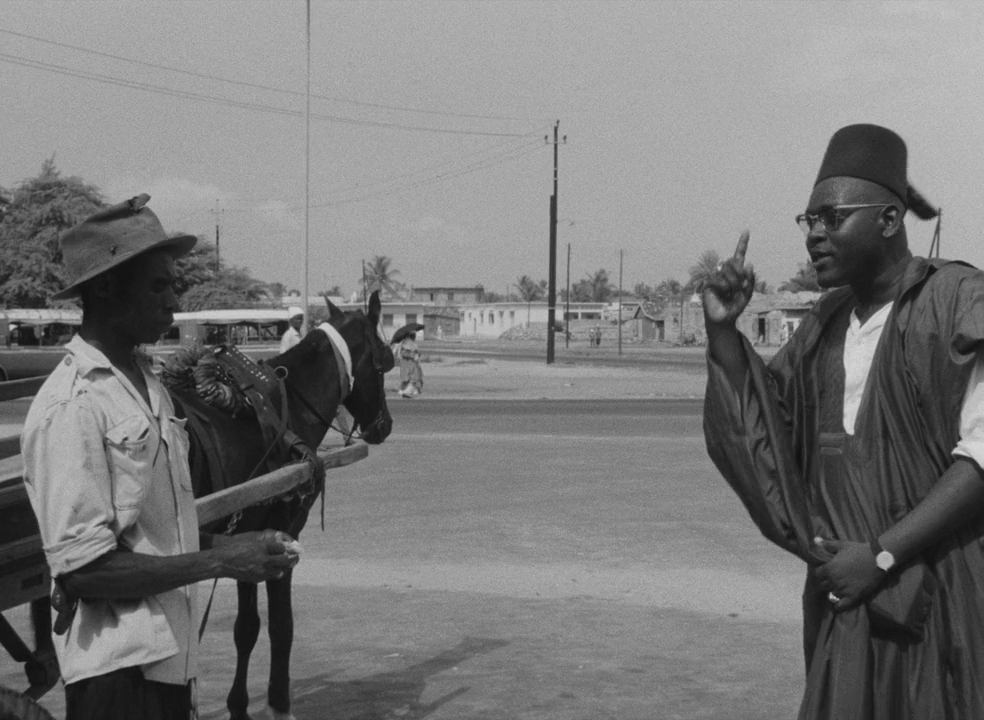
Poverty, unemployment, religion, greed, life, death, and the ultimate futility of existence are all treated in varying degrees. However, the wagoner is rightfully unconcerned with the thematic richness around his daily routine since he has real worries and troubles to attend to. He even appears to be uninterested in, or completely fails to notice, the divine juxtaposition when he transports the dead body of a little child to the graveyard right after transporting a heavily pregnant woman to the maternity ward.
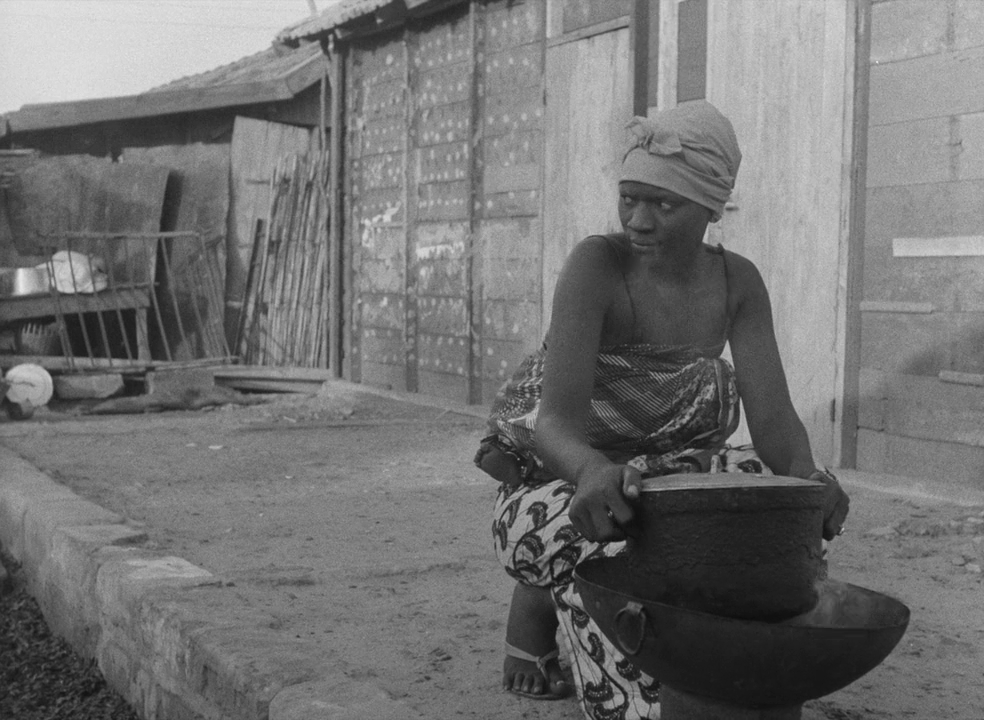
At the end of the day, the wagoner returns to his wife and child with empty pockets, announcing that he has nothing to show for his labor that day. His wife does not appear surprised. In fact, she seems prepared, and she hands over their child to the wagoner, promises that they would “have food tonight”, and sets out to perform the functions in which the wagoner had failed. The subject of the image of the African woman in African cinema can form volumes and volumes of books and journals, but the brief appearances of the wagoner’s wife at the beginning and at the end of the film set the stage for decades of portrayal as a figure relegated to certain functions and roles by custom but is clearly capable of offering as much, or maybe even more, than the male counterpart.
Sembène is one of the few early filmmakers whose catalogue remains available and relatively accessible, and Borom Sarret was restored in 2013 through concerted efforts by the Cineteca di Bologna/L’Immagine Ritrovata laboratory and Éclair, in association with Martin Scorcese’s World Cinema Project. The film is available in the Criterion Collection, and if you have not seen it yet, we urge you to!
Let us know what you think about the film in the comment section.


[…] considered to be the first film made by a black African man within the continent (Sembène’s Borom Sarret), the country delivered once again, giving us the first commercially distributed feature film by a […]